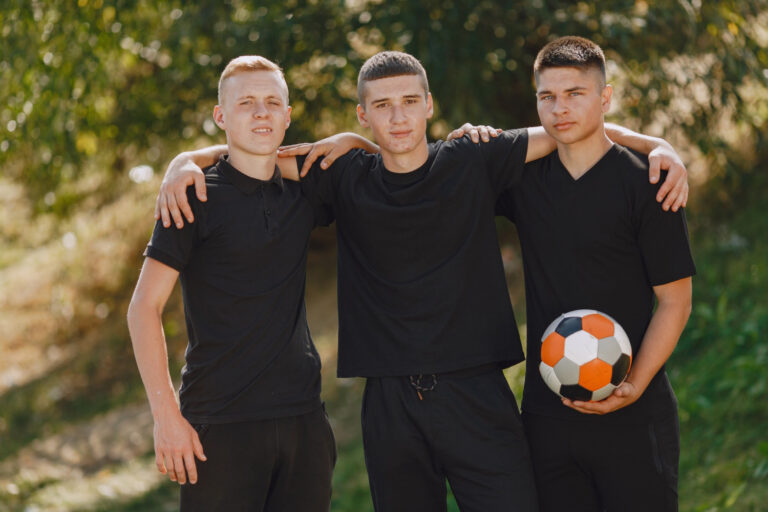

When Football Becomes Family Tradition
There are few things in life that bridge generations the way football does. You don’t always realize it when you’re a child, sitting on your dad’s shoulders in the stands, or when your gran passes down an old scarf faded by time and tears. But something is being handed over, more than just colors, more than just loyalty. It’s a rhythm of life. A heartbeat. A ritual that stretches backward and forward through time. When football becomes a family tradition, it’s no longer just a sport. It’s the connective tissue of memory, identity, and love.
Not every family has this. But for those who do, it shapes everything. Seasons aren’t measured by weather, they’re measured by league tables. Milestones aren’t marked by birthday cakes, but by big away days, first games, or last-minute winners. And the most precious stories are not from holiday dinners, but from cold nights in the terraces and those sun-drenched afternoons where everything seemed right with the world.
The First Match
Every tradition begins somewhere. For many, it starts with a first match. A parent or grandparent reaches out and says, “You’re coming with me today.” You don’t know what to expect. You might not even understand the game. But the moment you walk into the stadium, or stand behind a rope at a local pitch, you know you’ve entered something bigger than yourself.
You see the colors, hear the chants, smell the pies, feel the nervous buzz in the crowd. And you look over and see the way your dad’s eyes light up, or how your mum sings along with the anthem, or how your older brother doesn’t say a word but clutches his scarf tighter than usual. It hits you: this matters.
It becomes one of those core memories you never forget. You remember the score, the moment you joined in the chants, the exact view from your seat or standing spot. And from that point on, you’re in. Maybe not entirely at first, but the hook is set. A seed has been planted.
The Language of Love
In many families, football is how love is spoken. Some parents struggle to say “I’m proud of you,” but they’ll wake you at 6 a.m. to make a long drive to an away ground. Grandfathers who rarely share stories suddenly become poets when recalling “that cup final in ’78.” Siblings drift apart, only to reconnect through shared texts about transfer rumors or a tactical disasterclass.
Football becomes the safe space. A place where emotions are allowed. You can cry, shout, celebrate, complain. You can be vulnerable without needing to explain. Because the game doesn’t need explanation, it just is.
You might not agree on much as a family. Politics, music, lifestyle, those might spark debate. But when the team wins, you’re all on the same page. When they lose, you all feel it in your bones. It’s a bond deeper than opinion. It’s a kind of shared faith.
The Family Calendar
Once football is a tradition, it starts to shape everything else. Family events are scheduled around match days. Weddings, birthdays, holidays, there’s always the question, “Is there a game that day?” Entire weekends are planned based on fixtures. Christmas isn’t complete without Boxing Day football. Easter means spring matches. Summer is unbearable unless there’s a tournament.
Kids grow up knowing that Saturdays aren’t for malls or cartoons, they’re for matchday routines. The same breakfast, the same pre-match walk, the same pub or café, the same superstitions that must not be broken. It’s not obsessive. It’s sacred. It’s part of the identity.
Even vacations get shaped around football. Some families travel to follow their team abroad. Others plan trips to include stadium tours. And there’s always one day set aside just to watch the team, no matter what.
Over time, these routines stop feeling like obligations. They become home.
The Generational Thread
One of the most beautiful things about football as a family tradition is how it connects the living with the remembered. When a beloved relative passes away, their presence doesn’t leave the stands. It lingers. In the seat they used to sit in. In the chants they used to sing. In the scarf they left behind. You carry them with you to every game.
People keep going to matches not just for themselves, but for those they’ve lost. It becomes an act of remembrance. A way to keep someone close. You might find yourself watching the game and suddenly remembering exactly how your uncle used to shout at the ref, or how your mother used to whisper “We need this one” before kickoff. The ground becomes hallowed, not just because of the game, but because of the people who stood there before you.
Passing on the tradition becomes a responsibility. You take your own kids, or nieces, or nephews, and tell them the stories. “Your granddad loved this club. He used to bring me here.” And so the cycle begins again.
Inherited Loyalty
Football loyalty doesn’t always make sense. Why would someone born hundreds of miles from a club feel such deep connection to it? Often, it’s because someone in the family supported them. And if your family supports a club, so do you. That’s the rule.
You don’t choose the club; the club chooses you, through bloodline, through stories, through rituals. You grow up watching grainy old match DVDs, hearing tales of legends you never saw play, and inheriting rivalries that feel personal even though you weren’t there when they began.
This loyalty might seem irrational to outsiders. Why support a club that hasn’t won in years? Why stick with a team that breaks your heart every season? But they don’t understand, it’s not just about winning. It’s about belonging. You belong to this story, this song, this scarf. And you’d rather suffer with your family than celebrate with strangers.
Family in the Stands
If you look closely at any crowd, you’ll see football families everywhere. A father and son arguing over line-ups. A grandmother clapping rhythmically, her grandkids mimicking her. An older couple holding hands when the game gets tense. It’s not always loud. Sometimes it’s just shared glances, synchronized sighs, or the way they all rise together when the ball gets into the box.
These moments aren’t dramatic. But they are unforgettable.
And beyond bloodlines, football also creates chosen families. People who met on the terraces and became lifelong friends. Fans who’ve sat next to each other for decades and know each other better than their own siblings. Season ticket holders who watched each other’s kids grow up. It’s a different kind of family, but no less real.
Some families are built by birth. Others are built in the stands.
The Big Moments
Family traditions in football find their most profound expression in the big moments. The first time your child sees a goal scored live. The last game before your dad gets too old to make the journey. That playoff final you all attended together, singing with strangers-turned-family in the pouring rain. The giant-killing FA Cup night you still talk about every holiday.
It’s in these moments that you feel just how deep the tradition runs. You’re not just experiencing a match. You’re experiencing time collapsing in on itself. You’re your father as a young man, you’re your child as an adult to come, you’re every generation screaming the same chant, riding the same highs and lows.
That’s why people cry when they win the league after decades. That’s why people fall to their knees after a last-minute escape. It’s not just the football, it’s the meaning. All the years, all the pain, all the hope passed down like a precious heirloom finally coming to bloom.
The Cost and the Commitment
Let’s not pretend it’s always easy. Being part of a football family can mean long drives, cold nights, missed events, or ruined weekends. It can mean tears and arguments and tense silences in the car on the way home.
But it’s worth it. Because even in the worst times, you’re in it together.
You might storm off after a brutal loss, vowing never to come again. But by the next fixture, someone in the family sends a message: “Usual spot?” And you go. Not just for the team. For them.
More Than a Game
When football becomes family tradition, it becomes woven into the very fabric of who you are. It gives language to emotions, structure to seasons, and connection across time. It teaches loyalty, resilience, joy, and heartbreak. It’s not just what you do, it’s who you are, together.
In a world where so much pulls us apart, where time is short and relationships fray, football offers a space where we can still meet as equals, as fans, as family.
So when someone asks, “Why do you care so much about football?” the answer is never simple. It’s not about the scoreline. It’s about the years, the people, the Saturdays. It’s about that scarf your grandfather wore. The match your dad took you to. The jersey you passed down to your niece. It’s about everything between the games.